
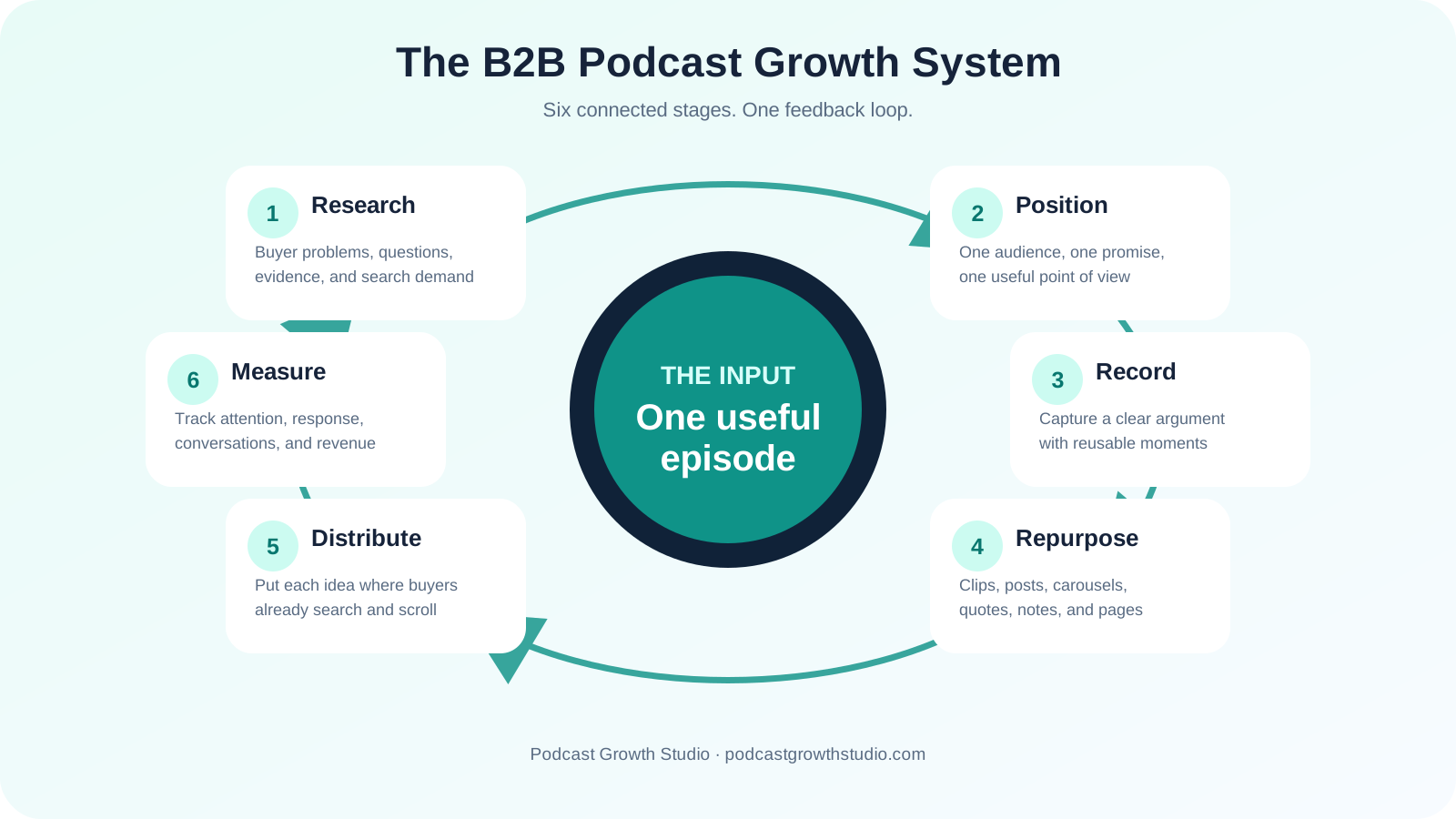
A B2B podcast grows when the right idea reaches the right buyer in more than one useful format, then gives that buyer a clear next step. The episode is the source. Research, positioning, repurposing, distribution, and measurement are the growth system around it.
This guide connects 12 detailed PGS resources containing more than 38,000 words. Use this page as the operating map. Open a supporting chapter when you need the full process, data, or implementation detail.
What a B2B podcast growth system is
A B2B podcast growth system is the repeatable process that connects what buyers need to know with what the company records, publishes, distributes, and measures. It has six stages: research, positioning, recording, repurposing, distribution, and measurement.
That definition matters because a podcast feed is only one container. It can hold excellent episodes and still create little discovery. Growth happens when ideas leave the feed and appear in places where buyers already search, scroll, compare, and ask questions.
A working system does not require every platform or every content format. It requires a deliberate path:
- Research a real buyer question. Choose a problem connected to the expertise you sell.
- Position one useful answer. Decide what the listener should understand, believe, or do after the episode.
- Record for clarity. Capture complete explanations, examples, and quotable statements.
- Adapt the strongest ideas. Turn each useful moment into the format that best carries it.
- Distribute by buyer behavior. Publish where the intended audience already spends attention.
- Measure response and business influence. Use the evidence to plan the next episode.
The architecture: one feedback loop
The six stages are not a production conveyor belt that ends at publishing. They form a feedback loop. Buyer questions shape episodes. Audience response reveals which explanations are useful. Sales conversations reveal which objections need a clearer answer. Those signals feed the next recording.
This is why a B2B podcast can become more valuable even when downloads remain modest. A single episode may help a prospect understand an expensive problem, give a sales team a useful explanation to send, attract a relevant guest, or create a search page that keeps earning qualified visits. None of those outcomes requires mass reach.
The system also separates two jobs that teams often mix together:
- The editorial job: make the idea accurate, specific, understandable, and worth a buyer's time.
- The distribution job: package and place the idea so the intended buyer can actually find it.
Strong editing cannot repair weak positioning. More distribution cannot make a generic idea valuable. The stages support one another, so diagnose the weakest stage before adding volume.
The complete 12-chapter resource library
This page is the map. The supporting chapters contain the detailed tutorials, sourced statistics, comparisons, workflows, and examples. Together, the selected library contains more than 38,000 words before this hub is counted.
Start with the business case
Choose the audience, promise, format, launch plan, offer, and attribution path before buying more equipment.
Read the B2B podcast launch guideUse current podcast data
Check adoption, listening behavior, platforms, discovery, catalog size, and advertising revenue with dated sources.
Open Podcast Statistics 2026Understand video behavior
Separate verified audience and platform signals from the claim that every show must become video-first.
Open Video Podcast Statistics 2026Understand sponsors and ads
Use sourced revenue, reach, recall, and response evidence without turning market averages into promises.
Open Podcast Advertising Statistics 2026Design the repurposing workflow
Map the episode into useful formats while preserving the context and intent of the original conversation.
Read the complete repurposing guideSelect stronger clips
Apply the stand-alone, hook, and buyer relevance tests before spending time on captions and motion.
Use the 3-test clip ruleBuild a realistic calendar
Sequence clips, carousels, quotes, and written ideas over 30 days instead of dumping every asset at once.
Use the 30-day content planFix the distribution gap
Build the path between a published episode and the people who would benefit from its ideas.
Read the distribution strategyRun the marketing system
Connect pre-launch work, weekly promotion, partnerships, owned channels, and measurement.
Read the podcast marketing guideDiagnose the growth stage
Match the work to the current bottleneck instead of copying tactics from much larger shows.
Read how to grow a podcastConnect attention to clients
Use clear conversion paths, CRM fields, attribution questions, and buyer-facing distribution.
Read the client acquisition guideChoose the operating model
Compare software, freelance production, and a managed service by scope, review time, and control.
Compare podcast repurposing costsHow to build the system from zero
1. Define the buyer and the business job
Start with one sentence: “This podcast helps [specific buyer] make [specific decision] by explaining [specific expertise].” If the sentence fits every business podcast, it is too broad.
The business job can be relationship building, category education, sales enablement, search demand, founder visibility, partner development, or qualified pipeline. Choose a primary job. A show can support several outcomes later, but its operating decisions need one priority.
Then write down the buyer's expensive problems. Expensive does not only mean money. A problem can cost time, create risk, delay a decision, damage trust, or block revenue. Topics tied to real consequences are more likely to earn attention than general inspiration.
2. Build a question bank, not a guest list
A guest list can make an interview show easier to schedule, but it does not create an editorial strategy. Build a question bank from sales calls, onboarding calls, support conversations, search queries, objections, proposal feedback, community discussions, and the questions partners repeatedly ask.
Score each question on four dimensions:
- Buyer relevance: does the answer help the intended buyer?
- Commercial proximity: is it connected to a problem your business solves?
- Evidence: can you support the answer with experience, data, examples, or a defensible framework?
- Format potential: can the answer become useful in audio, video, text, and visual formats?
High-scoring questions become episodes. Narrow subquestions become short clips, written posts, FAQ answers, and search pages. This gives the content system a shared source of truth.
3. Design the episode before recording
A useful episode does not need a word-for-word script. It needs an argument map. Write the main question, the short answer, three supporting points, one example for each point, the likely objection, and the next step.
For an interview, send the guest the editorial promise instead of a generic list of twenty questions. Tell them what the audience should understand by the end. Ask for specific stories, decisions, mistakes, and before-and-after context. This produces answers that can stand alone when adapted later.
For a solo episode, write opening sentences for the strongest sections. Those sentences help the recording reach the point faster and often become usable hooks without fabrication.
4. Record a clean source
Technical quality matters when it reduces friction. Prioritize understandable audio, stable framing, reliable local recording when available, separate tracks, and a backup. Expensive production design is secondary.
Record video when the camera does not make the host less consistent. Video creates more options for YouTube and short-form distribution. If video makes the process too fragile, keep the audio workflow sustainable and use written and designed formats around it.
Capture complete explanations. A clip editor cannot recover missing setup, undefined terms, or an answer that begins with “that” and never explains what “that” means. The host should occasionally restate the question inside the answer and name the audience or problem directly.
5. Create an editorial content map
After recording, review the transcript before opening the editing timeline. Mark moments by purpose:
- Decision: a recommendation with a clear reason.
- Explanation: a difficult concept made understandable.
- Evidence: a sourced figure, observation, or specific example.
- Objection: a concern the buyer needs resolved.
- Story: a sequence that makes the lesson memorable.
- Framework: a repeatable method the audience can apply.
Choose the strongest idea first. Then choose its format. Do not decide in advance that every episode must produce the same count. A visual framework may deserve a carousel. A precise answer may deserve a search page. A strong emotional or contrarian moment may work as a clip. A dense explanation may work better as a written post.
Build distribution around discovery surfaces
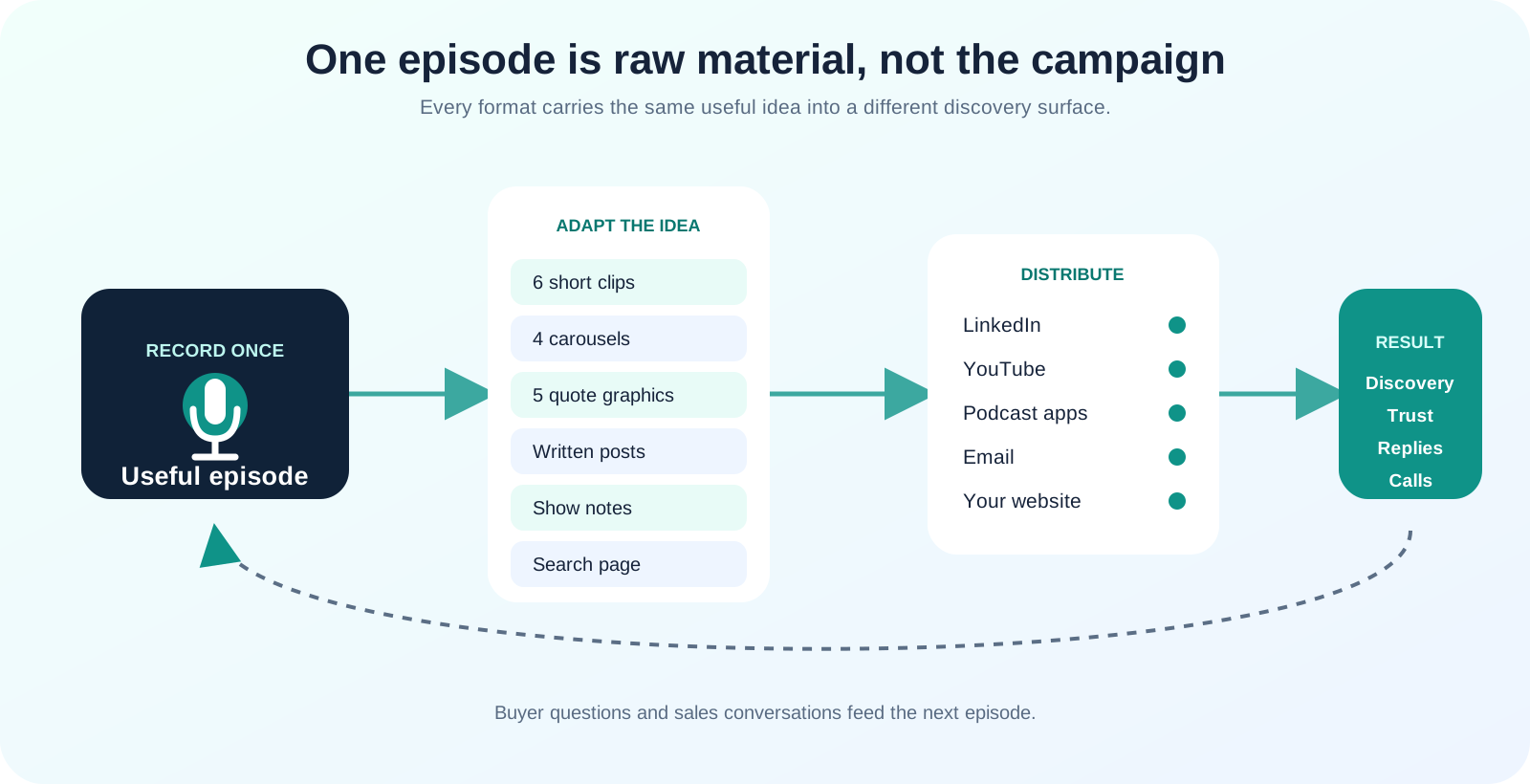
Distribution is not copying the episode link into five social platforms. It is adapting one useful idea for each place where the buyer may encounter it.
Use three layers:
- Owned surfaces. Your website, email list, podcast feed, and customer or prospect resources. These are the places you can maintain and improve.
- Platform surfaces. LinkedIn, YouTube, and other networks where the intended buyer already spends attention. These provide discovery but change their rules.
- Relationship surfaces. Guests, partners, customers, employees, communities, and sales conversations. These carry ideas through trusted people.
Choose one primary platform, one searchable surface, and one owned channel. For many B2B service firms, that can mean LinkedIn for active distribution, the website or YouTube for search, and email for return attention. The exact mix depends on buyer behavior, not a universal content checklist.
Make every asset complete enough to stand alone
A buyer should receive value before clicking. A clip needs the setup required to understand the answer. A carousel needs a clear conclusion, not a final slide that withholds the point. A search page needs a direct answer near the top. An email needs one coherent idea, not a list of links.
This approach also makes the system easier for search and answer engines to interpret. Clear headings, descriptive links, dated sources, visible authorship, original diagrams, and machine-readable data all help a page communicate what it contains. None of those elements guarantees a citation. They make the content easier to retrieve, evaluate, and quote accurately.
Connect the library with internal links
Internal links should describe the destination. “Read the Podcast Advertising Statistics 2026 report” carries more information than “click here.” Link from broad hubs to focused chapters, and from focused chapters back to the hub. This creates a topic structure for readers and crawlers.
Do not create a separate page for every wording variation. Create a focused page when the search intent, required evidence, or reader task is genuinely different. Maintain one canonical source for repeated facts, then link to it.
Measure the system, not one vanity number
Downloads are useful, but they only describe one part of consumption. A B2B system needs evidence from production through revenue. Use a layered scorecard.
Add two required fields to the sales process: “How did you first hear about us?” and “What content, person, or page made you take the next step?” Store the answers in the CRM exactly as the prospect describes them. UTMs and analytics help, but self-reported attribution often captures the human path that software misses.
Review topic-level patterns every month. Which questions attract the right roles? Which episodes become useful in sales conversations? Which pages earn relevant search impressions? Which guests introduce future guests or buyers? Use those answers to decide what to repeat.
A practical 90-day operating plan
The first 90 days should prove the message and the workflow. They are not enough to promise a specific revenue outcome. B2B buying cycles, existing audience, distribution access, price, trust, and execution quality all change the timeline.
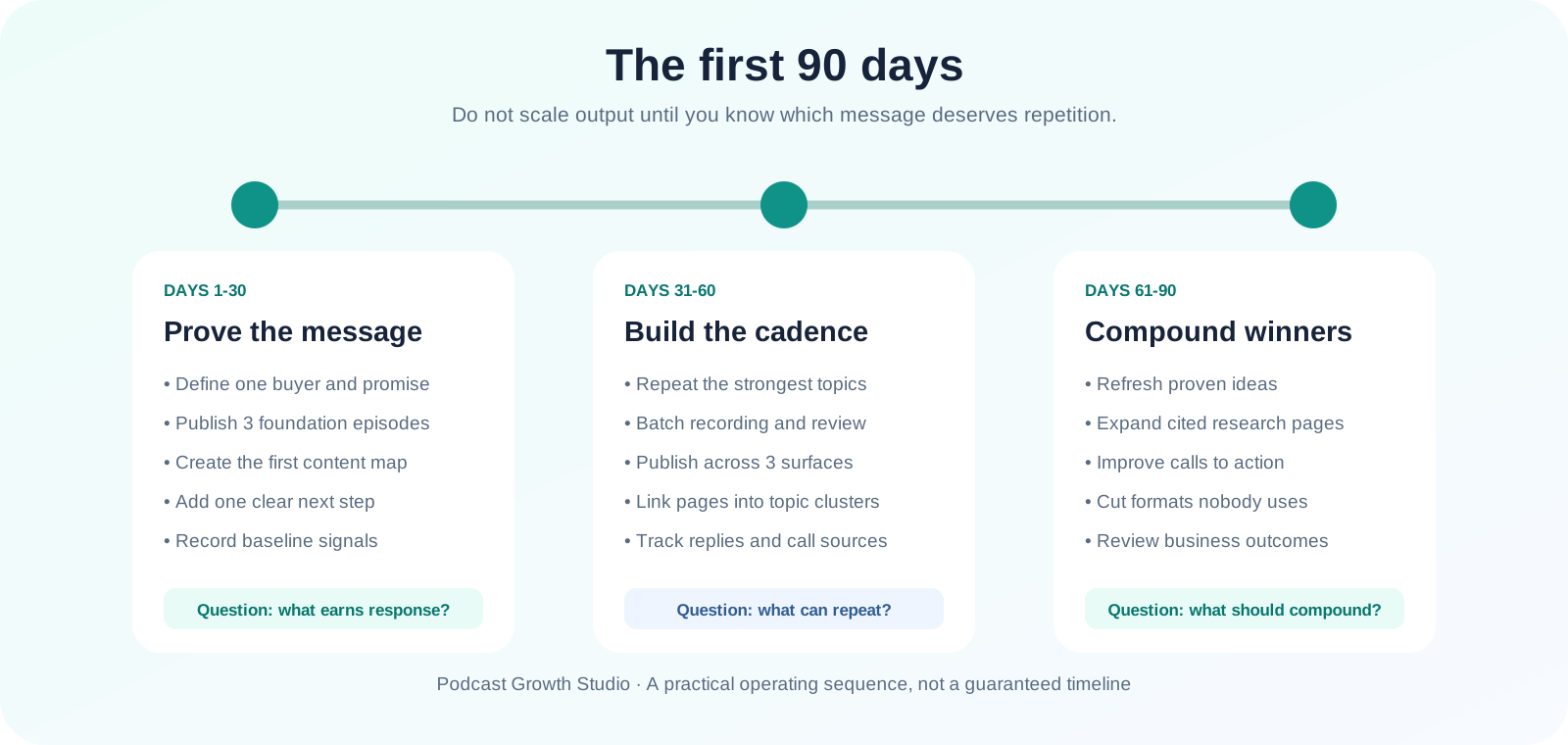
Days 1 to 30: prove the message
Define the buyer, promise, business job, and primary next step. Build a question bank. Record three foundation episodes that answer high-value questions. Turn each episode into a small set of assets and publish them across the selected surfaces. Record baseline signals without judging success too early.
Days 31 to 60: build the cadence
Repeat the topics and formats that earned relevant response. Batch the production stages that do not require live judgment. Link related search pages. Create a consistent review checklist. Track where each qualified reply and sales conversation began.
Days 61 to 90: compound the winners
Refresh strong ideas with better evidence or a clearer example. Expand the pages buyers use. Improve the next step after high-intent content. Stop formats that consume time without creating useful attention. Review results by topic, audience, surface, and commercial influence.
Seven failure modes to diagnose first
- The audience is undefined. Broad language produces broad topics and weak relevance.
- The show has no editorial promise. Episodes become unrelated conversations instead of a useful body of work.
- The recording is treated as the finished campaign. The best ideas remain inside a feed with limited discovery.
- Repurposing rewards quantity. Context is cut away and every sentence becomes content, even when it carries no useful point.
- Distribution means link posting. The audience receives a request to leave the platform before receiving value.
- Measurement stops at downloads. The team cannot see which topics create trust, replies, or qualified conversations.
- The workflow is too ambitious. A fragile multi-platform plan collapses when client work becomes busy.
Fix the earliest broken stage. If the question is weak, do not add more editing. If the content is useful but unseen, fix distribution. If response exists but cannot be tied to opportunities, fix attribution.
The B2B podcast system checklist
Before the next recording
- One defined buyer
- One expensive problem
- One episode question
- One direct short answer
- Three supporting points
- Specific examples or evidence
- Likely objection
- Clear next step
After the recording
- Transcript reviewed first
- Strong moments selected by purpose
- Every asset stands alone
- Claims checked against sources
- Visuals add information
- Links describe destinations
- Distribution fits buyer behavior
- Attribution fields are ready
Frequently asked questions
What is a B2B podcast growth system?
A B2B podcast growth system connects research, positioning, recording, repurposing, distribution, and measurement. The episode supplies the raw material. The surrounding system turns useful ideas into discoverable content and measurable business conversations.
How is B2B podcast growth different from increasing downloads?
Downloads measure episode consumption. B2B growth also measures whether the right buyers discover the ideas, return, reply, subscribe, visit commercial pages, and book qualified conversations. A smaller relevant audience can create more business value than a larger general audience.
How much content can one B2B podcast episode produce?
The useful number depends on the episode. A focused recording can often support short clips, written posts, carousels, quote graphics, show notes, email content, and a search page. Every asset should preserve context and carry one complete idea.
Should a B2B podcast publish video?
Record video when it does not make the production process fragile. Video expands the available formats for YouTube and short clips. Audio still matters, and a sustainable audio-first show is better than a video workflow the team cannot maintain.
How long does a B2B podcast take to work?
There is no universal timeline. Early evidence appears in relevant replies, returning visitors, guest referrals, and qualified conversations. Revenue attribution usually takes longer because B2B buying cycles differ by offer, price, and market.
What should a B2B podcast measure?
Measure production consistency, content quality, qualified reach, audience response, commercial intent, and revenue influence. Track the source and first touch for every sales conversation instead of relying on downloads alone.
Methodology and update policy
This hub organizes 12 existing Podcast Growth Studio guides into one operating system. The supporting word count was calculated from the visible text of those pages on September 8, 2026, excluding script and style content, then rounded down to “more than 38,000 words.” It is a measure of library scope, not a ranking claim.
Statistics are maintained in the linked 2026 research pages, where each figure includes a source, date, context, and limitations. This hub avoids repeating time-sensitive numbers when the linked source page is the better canonical reference.
The framework reflects PGS editorial and production practice. It does not promise downloads, leads, citations, rankings, or revenue. Results depend on the market, offer, existing trust, subject expertise, execution quality, and distribution access.
How to cite this guide
Suggested citation: Younis, Fahad. “The B2B Podcast Growth System: Complete 2026 Guide.” Podcast Growth Studio. Published September 8, 2026. https://podcastgrowthstudio.com/posts/b2b-podcast-growth-system
When quoting a statistic, cite the original research organization listed on the linked statistics page. Credit Podcast Growth Studio when reproducing an original diagram or this six-stage framework.
Build the smallest system you can maintain
Start with one buyer question, one useful recording, three adapted formats, one primary platform, one searchable surface, and one attribution question. Run that loop until you know what earns relevant response. Add volume after the signal appears.
If the editorial thinking is already there but the repurposing and distribution work keeps slipping, Podcast Growth Studio can operate that layer. The founding Content Engine turns one episode into 6 clips, 4 carousels, 5 quote graphics, captions, titles, show notes, and a 30-day LinkedIn plan. Delivery is within 7 days.